

How Dry Ice Cleaning Works
Introduction to dry ice cleaning. If you have a question that’s not answered here, try our FAQ page.
Why Dry Ice Cleaning is Effective
The unique properties of dry ice cleaning make it an extremely powerful method of removing contamination while protecting the machinery or structure being cleaned. The short story is:
The extreme cold shrinks the contaminant, causing it to delaminate; then
The kinetic energy of the continuing stream of pelletised CO₂ pulverises the contaminant; and
The 800x expansion of the CO₂ as it turns into a gas blows the contaminant outwards, with minimal pressure on the surface being cleaned.
The entire process occurs within a fraction of a second, moving through three distinct physical phases:
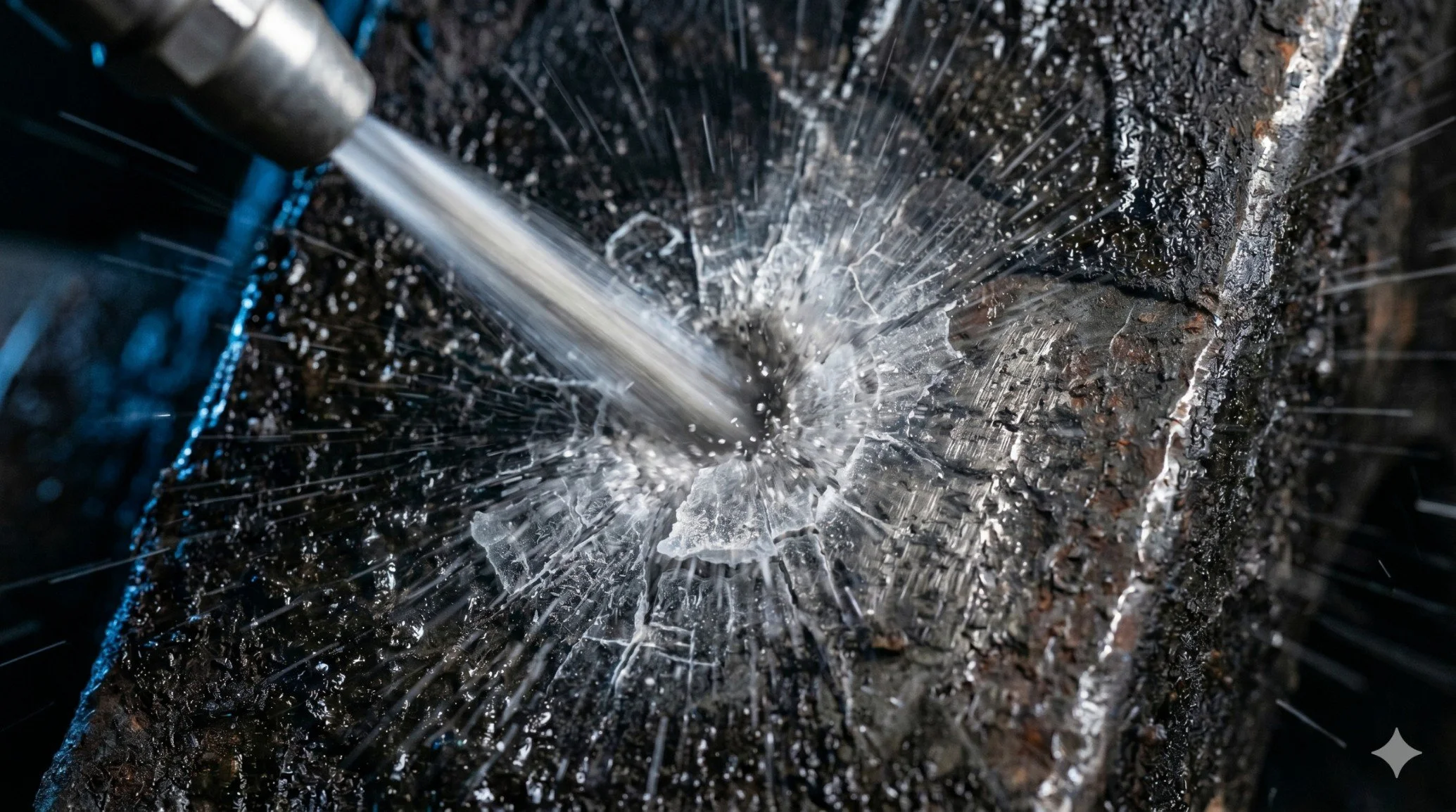
1. Thermal Shock & Delamination
When dry ice pellets (at -78.5°C) strike a warmer contaminant like grease, paint, or carbon, they create a "Thermal Shock." This extreme temperature drop causes the grime to become brittle and crack, instantly breaking the adhesive bond and delaminating it from the surface.
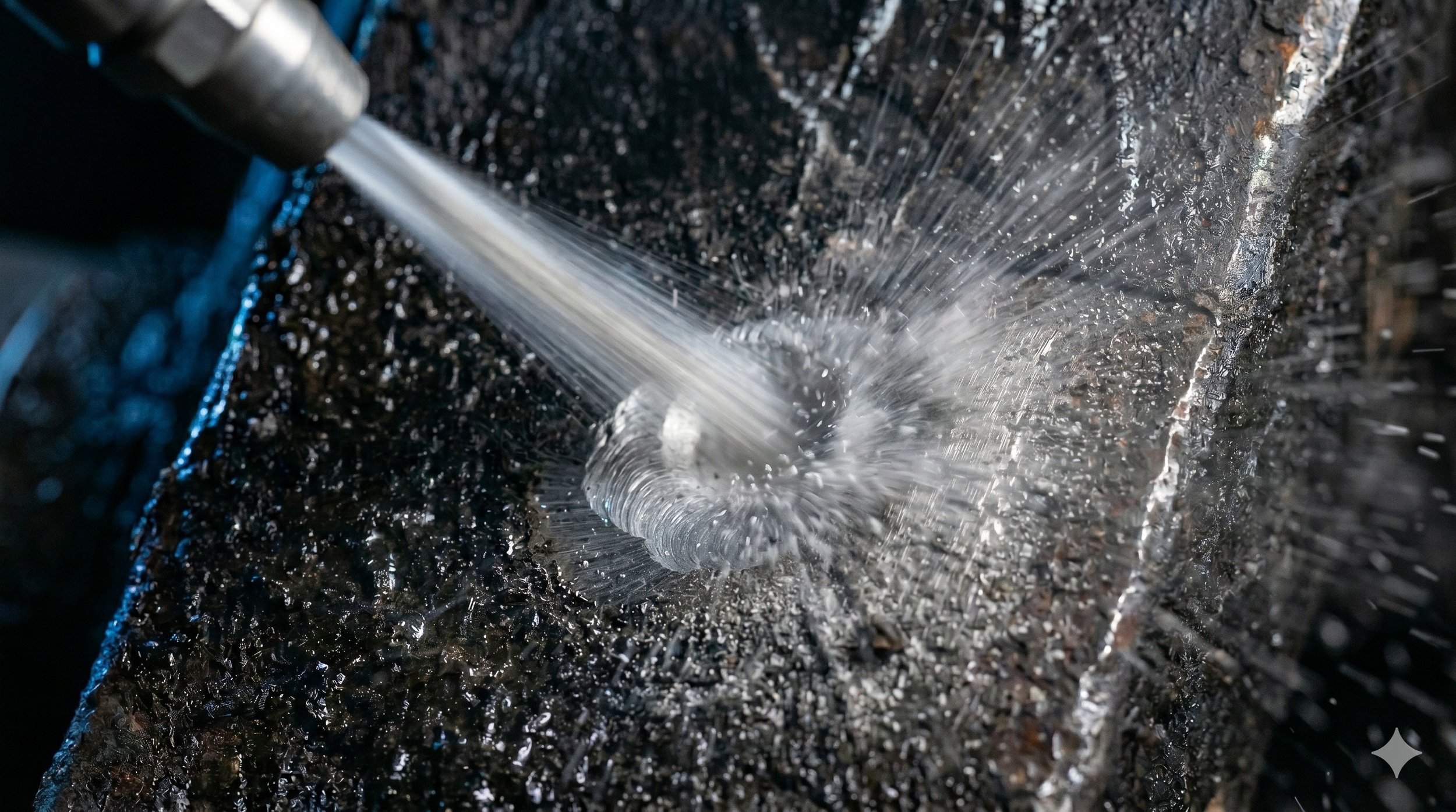
2. Kinetic Energy Transfer
Propelled at near-supersonic speeds, the pellets provide the necessary force to knock the loosened material away. Because dry ice is relatively soft, this energy is transferred into the contaminant rather than the asset itself, ensuring a deep clean without surface damage.
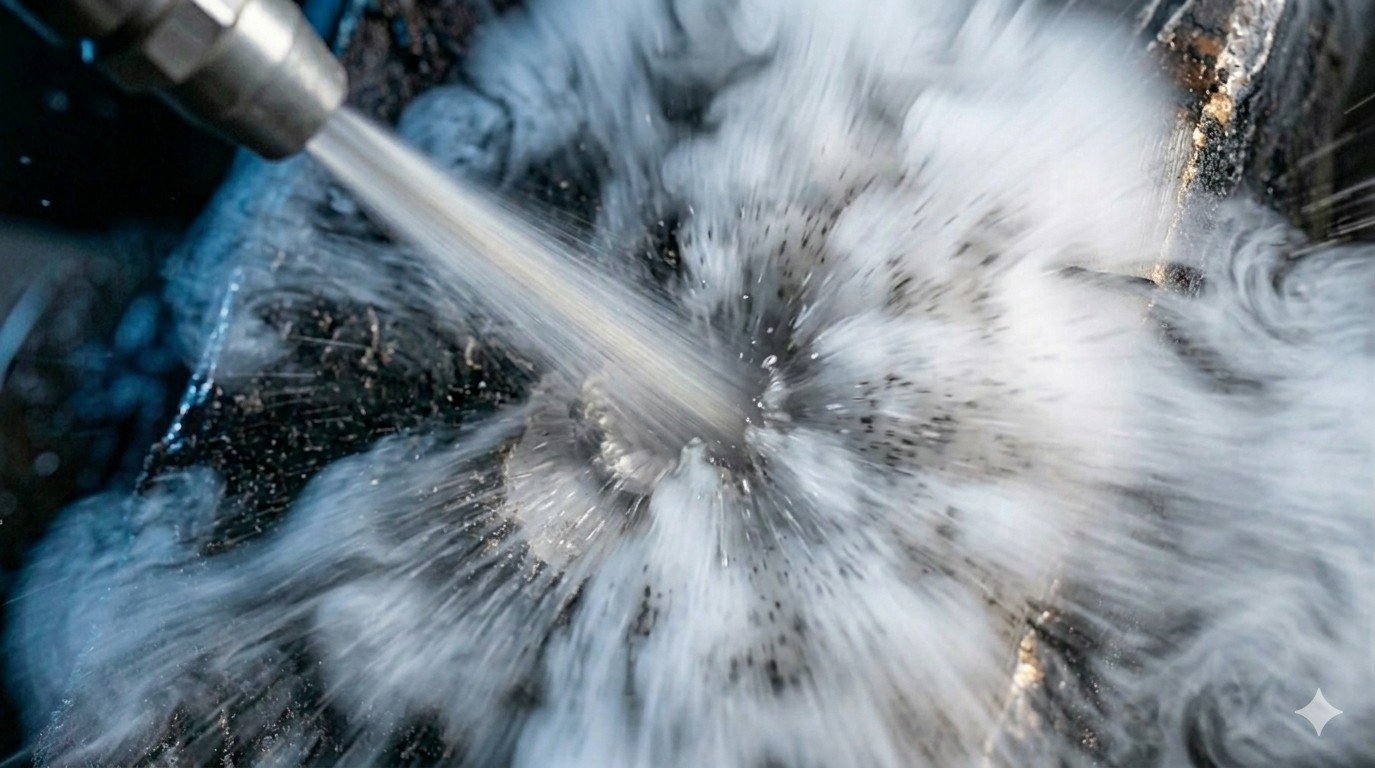
3. Rapid Sublimation (The "Micro-Explosion")
Unlike water or sand, dry ice doesn't melt—it turns instantly from a solid to a gas (sublimation). Upon impact, the CO2 expands in volume by nearly 800%. This acts like millions of tiny "micro-explosions" underneath the contaminant, lifting it off the surface from the inside out.
Process visuals generated via Google Gemini for illustrative purposes.