

INDUSTRY FOCUS
Oil & Gas Operations
Overview
Upstream, midstream, and downstream oil and gas assets operate in some of the harshest conditions in industry. Equipment is continuously exposed to heavy hydrocarbons, bitumen, paraffin wax, corrosion, and chemical salts — contaminants that degrade heat transfer efficiency, accelerate pipeline corrosion, and obstruct the critical inspections that keep facilities safe and compliant.
Conventional cleaning methods compound the problem. Ultra-high-pressure water blasting generates large volumes of hazardous wastewater, and abrasive media carries real risk of entrapment in rotating machinery. Cryo Kinetic dry ice cleaning is waterless, non-destructive, and highly portable — enabling many maintenance tasks to be completed while plants remain online.
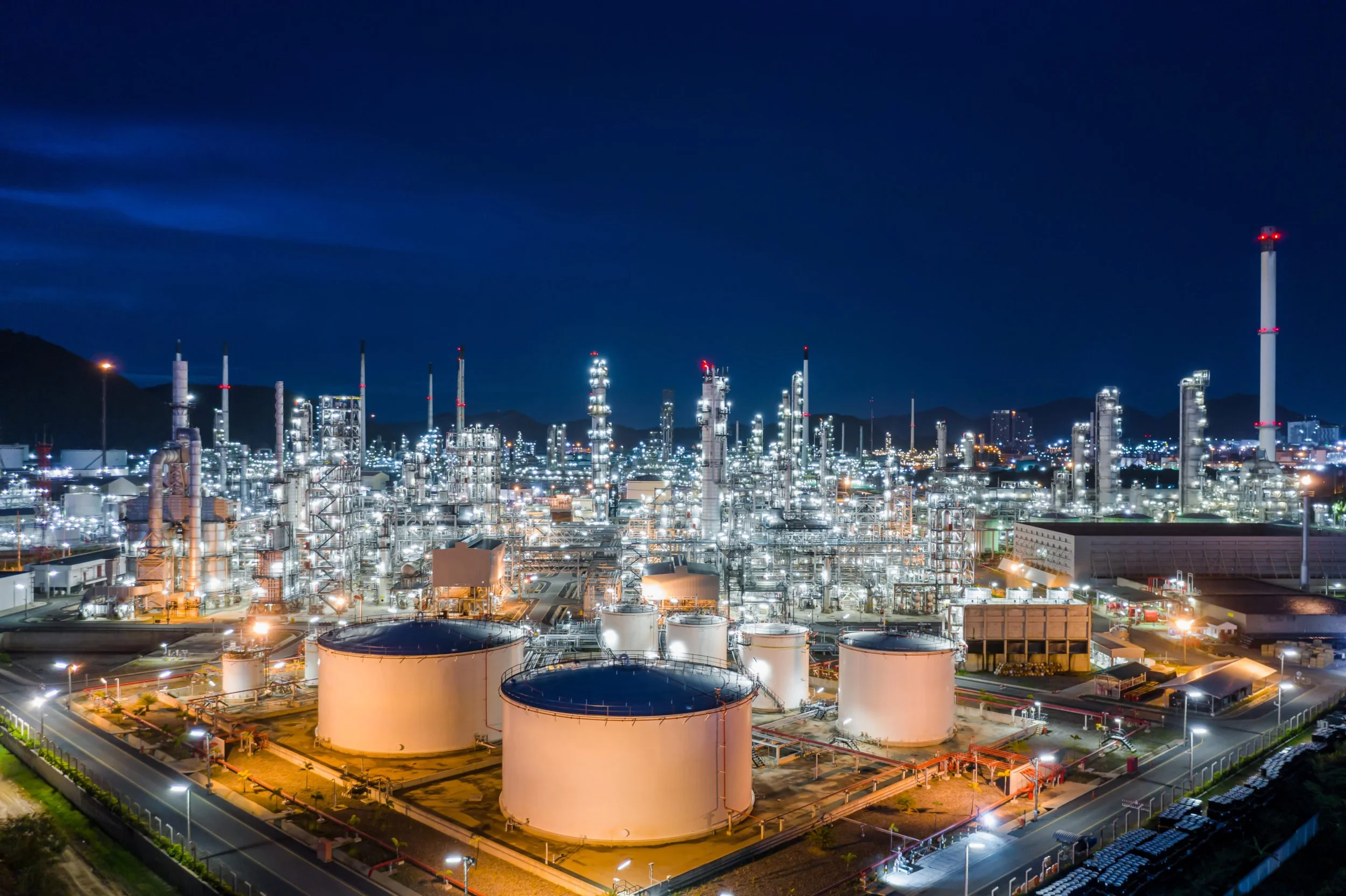
Why Dry Ice Outperforms Water & Abrasive Blasting
Water and abrasive grit are significant hazards in refinery maintenance. Wet blasting introduces moisture that triggers flash rusting on bare steel and risks damaging electrical motors, control panels, and generator windings. Abrasive grit migrates into bearing housings, valves, and mechanical seals — causing premature wear and unplanned failures that carry serious cost and safety consequences.
Cryo Kinetic technology is completely dry, non-abrasive, and non-conductive. Dry ice pellets sublimate entirely on contact, generating zero secondary waste that requires containment, treatment, or hazardous disposal. The non-abrasive process also allows delicate heat exchanger fin-fans and instrumentation lines to be cleaned without mechanical distortion or surface profile alteration.
APPLICATIONS
Dry ice cleaning works across the full range of process equipment and critical assets in oil and gas facilities — here's how we tackle each one:
-
Hydrocarbon film, baked-on dust, and scale accumulate between cooling tubes and restrict airflow, degrading heat dissipation across the facility. Non-abrasive pellets glide through cooling bands and clean tube surfaces without bending or distorting fragile fins — restoring thermal transfer efficiency and maximising cooling airflow without taking the unit offline.
-
Sulfide scales, chlorides, and failed coating residues on inspection joints compromise the accuracy of Non-Destructive Testing and mask early corrosion indicators. Deep pore penetration lifts salts and leaves dry, clean metal surfaces — delivering superior surface preparation for NDT without introducing moisture that triggers flash rusting.
-
Tar, bitumen, and paraffin wax accumulate on pipe exteriors and beneath insulation, creating conditions for moisture-under-insulation corrosion that's costly to detect and repair. Cryogenic thermal shock cracks dense hydrocarbon deposits from bare pipe surfaces — clearing pipe racks completely and reducing corrosion risk under insulation.
-
Heavy crude fractions, sulfur deposits, and scale build up on vessel walls and create hazardous conditions for internal inspection and welding operations. Gas expansion strips thick deposits from vessel walls cleanly and completely — delivering safe, residue-free vessel preparation with no secondary waste to manage before entry or hot work.
-
Fly ash deposits, carbon, and sulfur scale accumulate on heat recovery steam generator tube bundles and progressively reduce boiler thermal performance. Supersonic dry ice streams fracture hard ash scale on contact — restoring boiler efficiency without generating the secondary water waste associated with hydro-blasting.
-
Heavy drilling mud, grease, and dust compact into radiator fins and restrict coolant airflow, leading to engine overheating and unplanned field shutdowns. A dry ice stream sweeps debris from fragile radiator fins without distortion — restoring pump cooling capacity and keeping field equipment running in remote, logistically challenging environments.
-
Hydrocarbon mist, grease, and atmospheric soot contaminate electrical contacts and control cabinet internals, creating fault risk in safety-critical systems. Non-conductive dry ice gas cleans active control cabinets safely — decontaminating electrical contacts with zero risk of wet short circuits or moisture ingress.
Cost Reductions for Oil & Gas
The primary economic advantage of Cryo Kinetic systems in oil and gas facilities is the ability to perform high-quality cleaning online and in-place — bypassing the major turnaround shutdowns that represent the most significant cost in refinery and compressor station maintenance. Active operations can continue during many cleaning processes, delivering productivity gains of up to 75% and cleaning cost reductions of 30% to 50% compared to traditional sand or chemical washing.
Eliminating water from the cleaning process also removes the generation of oil-contaminated runoff — avoiding thousands of gallons of toxic wastewater per cleaning cycle and significantly reducing environmental compliance liabilities and disposal fees.
Keeping heat exchangers and fin-fans continuously clean optimises heat dissipation across the facility — directly reducing fuel consumption, lowering emissions, and reducing the risk of emergency shutdowns driven by thermal performance degradation. Because dry ice is non-conductive and non-flammable, it is the safest solution for cleaning sensitive electrical components, instrumentation, and "live" process equipment in volatile environments.