

INDUSTRY FOCUS
Print & Packaging Systems
Overview
High-speed print and packaging machinery operates at tolerances where even minor misalignment drives significant scrap rates and print quality failures. Production lines continuously accumulate ink, grease, varnishes, paper dust, and hot-melt adhesives — and the standard response of manual scrapers and chemical solvents creates problems of its own. Solvent cleaning is slow, labour-intensive, and generates hazardous waste that carries real disposal costs. Manual scraping risks gouging expensive anilox rolls and impression cylinders that are costly to replace.
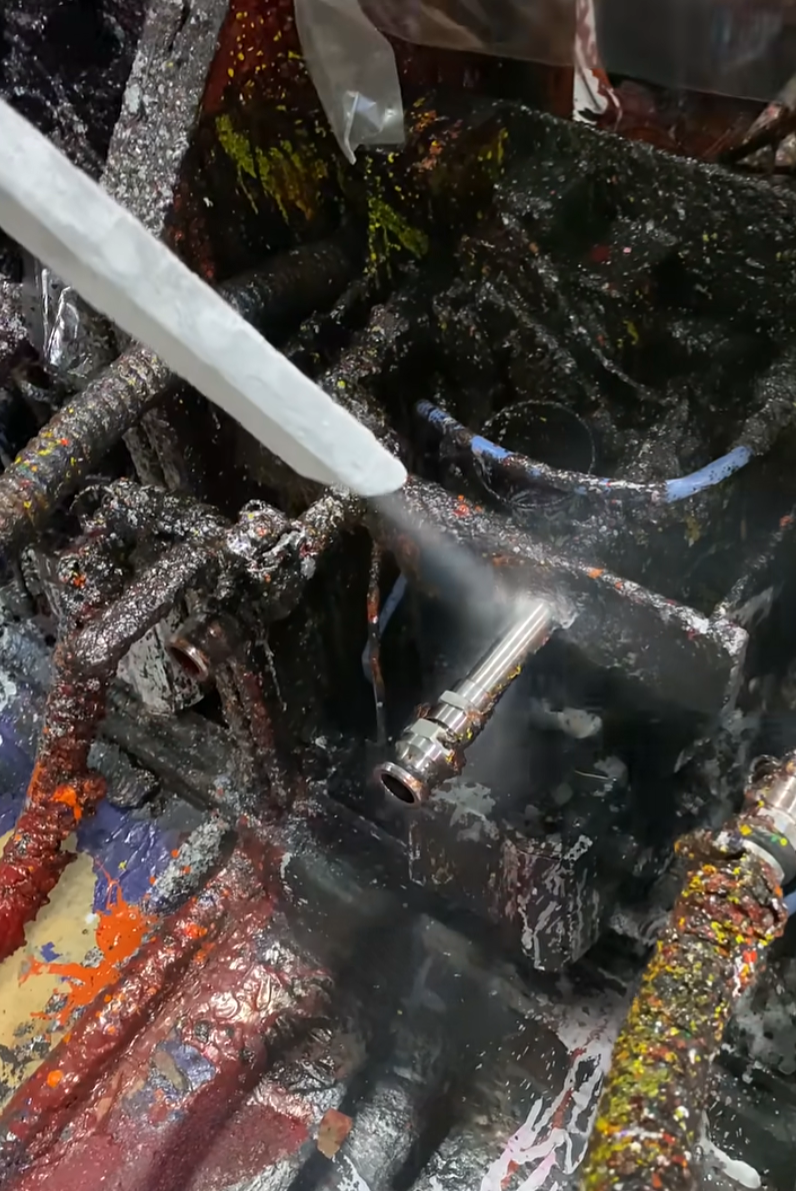
Cryo Kinetic dry ice cleaning removes contaminants rapidly, without solvents and without teardowns — restoring equipment to peak operating speed with zero risk of surface damage.
Why Dry Ice Outperforms Chemical Cleaning
Solvent wiping generates high volumes of volatile organic compounds (VOCs) and produces contaminated wipes requiring expensive hazardous waste disposal. Prolonged solvent contact also causes rubber rollers, blankets, and delicate components to swell, crack, and deteriorate prematurely.
Cryo Kinetic technology eliminates solvents entirely. Our pellets are completely non-abrasive, preserving the microscopic cell geometries of laser-engraved anilox rolls and protecting chrome-plated impression cylinders from wear. Because dry ice sublimates on impact, no secondary slurry forms — preventing abrasive particles or moisture from migrating into high-precision press bearings and gears.
APPLICATIONS
Dry ice cleaning works across every critical component in your press and packaging line — here's how we tackle each one:
-
Dried water-based, solvent, and UV inks clog engraved cells and degrade ink transfer volume over time. Dry ice micro-pellets penetrate cells and lift dried ink via sublimation — restoring full transfer cell volume with zero roll wear or engraving damage.
-
Heavy varnish, ink skin, and dried coatings harden onto chrome surfaces and slow colour change turnarounds. A kinetic blast stream shears hardened ink cleanly — leaving trays completely clear and ready for fast colour changes without manual scraping.
-
Hardened hot-melt and cold glue residues restrict nozzle flow and cause application inconsistencies. Thermal shock contracts and breaks adhesive bonds instantly — restoring gluer nozzles to full flow without solvent-based wire picking or disassembly.
-
Ink mist, grease, and compacted paper dust accumulate on gripper fingers and compromise paper registration. Super-cold gas expansion cleans intricate gripper mechanisms precisely — improving sheet registration and reducing press jams and high-sheet waste.
-
Wax and clay-based graphic coatings compact onto rollers, causing cardboard scuffing and tracking errors. Dry ice sublimation lifts compacted clay without abrading roller surfaces — restoring clean, accurate product tracking through the line.
-
Paper fibre, board dust, and oil residue accumulate in critical guides and cutting components, causing print defects and guide failures. A supersonic dry ice stream clears dust and residue from tight tolerances — eliminating dust-related defects and restoring guide accuracy.
-
Conductive paper dust and carbon grease build up on circuit tracks and create short-circuit risk. Non-conductive dry ice media sweeps panels clean safely — removing particulate buildup without static discharge risk or moisture exposure.
Operational Benefits for Print & Packaging
Dry ice systems clean equipment up to three times faster than conventional chemical and manual scraping methods. Because cleaning is performed with machinery assembled, hot, and in-place, press downtime is kept to a minimum and production resumes at full design speed immediately.
The dry, residue-free process prevents paper path misalignment and clears clogged vent slots — two common causes of speed-limited press operation. Facilities using Cryo Kinetic technology report meaningful reductions in startup scrap rates alongside improvements in KPIs and Overall Equipment Effectiveness (OEE).
Replacing organic solvents with dry ice also delivers measurable environmental and compliance benefits: lower VOC emissions, improved plant safety, and eliminated hazardous solvent disposal costs.