

INDUSTRY FOCUS
Food & Beverage Industry Applications
Overview
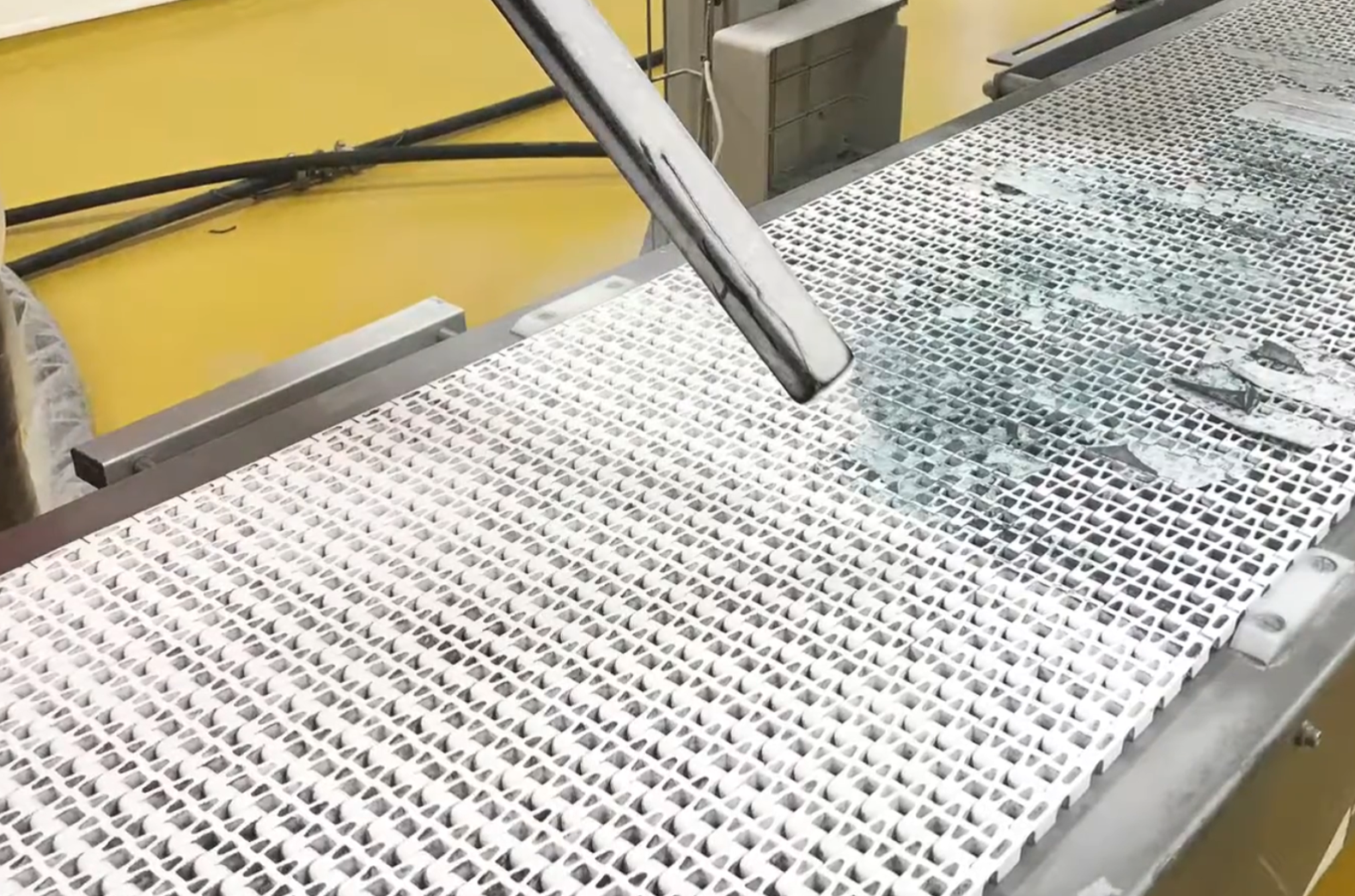
In food and beverage processing, sanitation isn't optional — it's the foundation of regulatory compliance and product safety. Processing equipment accumulates burnt-on dough, carbonised sugars, grease, proteins, and chemical residues that are genuinely difficult to shift. Conventional washdown methods — high-pressure water, chemical detergents, sanitising foams — introduce risks of their own: water ingress damages sensitive electrical controls, accelerates corrosion, and creates biological reservoirs where Salmonella, Listeria, and E. coli thrive.
Dry ice cleaning is waterless, non-toxic, and approved for use in food production environments. It decontaminates machinery in-situ, cutting sanitation downtime dramatically.
Why Dry Ice Outperforms Wet Sanitation
Water is the primary vector for pathogen proliferation in food plants. Traditional wet sanitation requires wrapping electrical motors, sensors, and control panels before cleaning even begins — and after cleaning, facilities must run prolonged drying cycles before production can resume, leaving a standing window of risk for corrosion and biological regrowth.
Cryo Kinetic technology is dry, non-conductive, and non-abrasive. Our pellets are manufactured from food-grade media approved by the BRC, HACCP, FDA, and EPA. Independent research confirms that the extreme thermal shock of dry ice blasting decontaminates surfaces against major foodborne pathogens — with zero risk of cross-contaminating adjacent processing lines.
APPLICATIONS
-
Burnt-on dough, carbonised sugars, and grease build up on oven bands and reduce thermal transfer efficiency. Supersonic pellet impact breaks stubborn carbon bonds and clears them completely — restoring oven belt performance without chemicals or disassembly.
-
Sticky seasoning residues, fats, and starch accumulate in scale buckets and compromise weighing accuracy. Non-abrasive dry ice microparticles sweep away caked deposits in-situ, leaving calibrated buckets clean with zero risk of load cell damage.
-
Yeast, gluten, and caked protein residues on mixing shafts create batch-to-batch contamination risk. Volumetric gas expansion shears tough organic films from surface contact points, delivering a pathogen-free substrate ready for the next production run.
-
Hot-melt glues, adhesive overspray, and paper dust clog nozzles and foul folding trays. Cryogenic cooling embrittles hot glue residues for rapid release — clearing nozzles and restoring line efficiency while reducing product scrap.
-
Cooking oils, animal fats, and wax-based coatings accumulate on rollers and belt structures, reducing traction and creating pathogen nesting environments. Dry ice sublimation lifts grease layers cleanly, restoring roller performance and eliminating biological harborage points.
-
Conductive flour dust, grease, and carbon film on motors and panels create fire risk and operational failures. Dry, non-conductive dry ice gas cleans delicate switches and components safely — no wrapping, no drying downtime, no risk of moisture ingress.
-
Animal proteins, fatty acids, and product pulp lodge in tight blade housings where standard cleaning methods can't reach. Dry ice micro-penetration lifts biological residues from these confined spaces, achieving the high sanitisation standards required for BRC pre-audit compliance.
Operational Benefits in Food Production
The most immediate ROI driver for food facilities is the reduction of sanitation-related downtime. Because machinery can be cleaned hot and in-place — without cooling down or disassembling complex components — typical cleaning cycles are shortened by up to 80%. Pre-audit deep cleans and daily sanitisation runs can be executed during brief production breaks rather than requiring scheduled line shutdowns.
Eliminating water from the cleaning cycle prevents water-induced corrosion, removes the cost burden of wastewater treatment, and protects sensitive electronics from structural damage. The non-abrasive nature of dry ice also preserves the mirror finishes on stainless steel surfaces — preventing the micro-scratches where bacteria colonise and auditors take notice.
Because the process is dry and chemical-free, it is ideal for moisture-sensitive environments like bakeries and industrial kitchens, effectively removing carbonised food, grease, and proteins without the risk of cross-contamination or toxic residue.